Both “biodegradable” and “compostable” relate to biodegrading, but they describe different material properties and end-of-life requirements. Let AnEco quickly unpack these two labels so families and businesses can make more informed, greener choices.
A quick browse through eco-conscious product aisles will likely bring you across two familiar labels: “biodegradable” and “compostable”. Both concern a material’s ability to break down through biological processes, but are they interchangeable?
Understanding what each label means supports smarter purchasing decisions. It also ensures that products are collected and treated correctly after use, making sustainable choices more meaningful from start to finish.
Biodegradable: What Does the Label Really Tell Us?
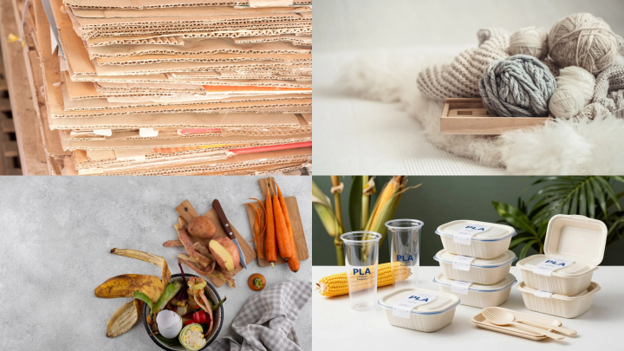
For plastic products, “biodegradable” describes a material’s ability to be broken down by microorganisms under suitable conditions. According to ISO guidance, with sufficient oxygen, this process can convert a material into CO₂, water, mineral salts, and biomass.
However, the word “biodegradable” alone does not specify where the product will break down, how long the process will take, or what the result may contain. A product that biodegrades within a few months and one that takes years could both be described broadly as “biodegradable”. For this reason, buyers should look for more information from the manufacturers to determine the most appropriate end-of-life processing route.
Compostable: Is It Just Another Word for “Biodegradable”?
Despite belonging to the broader category of biodegradable, compostable is a more specific, criteria-based claim. A product labeled “compostable” must be completely decomposed under defined composting conditions while meeting relevant technical requirements.
Under ISO requirements, compostable plastics must meet 4 strict criteria: disintegration during composting, ultimate aerobic biodegradation, control of material constituents, and assurance that the resulting compost does not adversely affect terrestrial organisms.
Compostable products are generally associated with two main treatment methods:
- Industrial composting: The product must be sent to a suitable composting facility with controlled temperature and moisture.
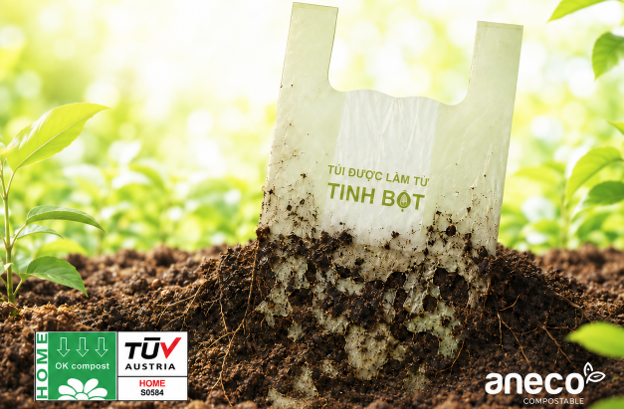
- Home composting: The product breaks down easily in a home compost bin or garden compost heap at normal temperatures.
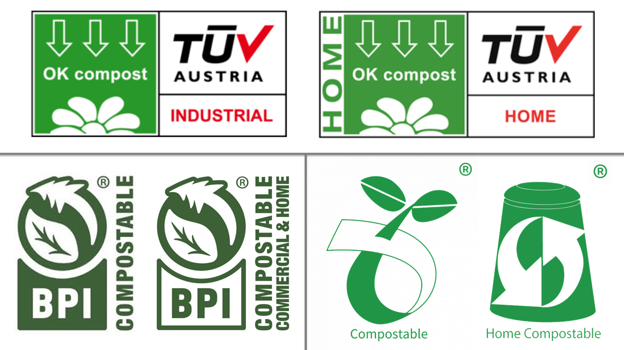
International compostability certifications serve as a helpful key, allowing buyers to identify which composting route applies to a particular product.
Choosing the Right Solution for Consumers and Businesses
For quick distinction, a “biodegradable” label indicates a general ability to break down by microorganisms and requires more information about the environment and timeframe. A “compostable” label, meanwhile, guarantees the product’s ability to break down completely and become organic fertilizer under specific composting conditions.
Before purchasing, individual consumers and businesses should compare information on the packaging with the actual treatment options they have. For biodegradable products, verify the degradation timeframe. For compostable products, check whether the certification applies to industrial or home composting.
AnEco – Green Solutions for More Sustainable Consumption
Supporting sustainable consumption, AnEco offers a broad portfolio of 100% compostable solutions, from garbage bags, food storage bags, and shopping bags to gloves, table covers, and disposable tableware.
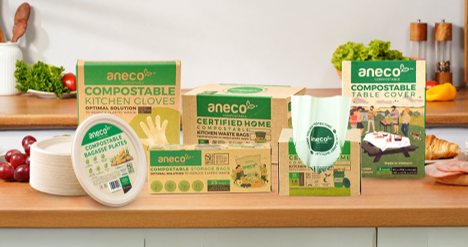
Each product AnEco brings to you carries internationally recognized certifications:
- BPI Compostable (the United States): Certifies that the product meets established requirements for composting in commercial or industrial facilities.
- TÜV OK Compost (from TÜV Austria): A globally recognized certification system that includes OK compost INDUSTRIAL for industrial composting and OK compost HOME for home composting with properly managed conditions.
- Seedling (Europe): Identifies products certified for compostability in accordance with the European standard EN 13432.
Meaningful green consumption starts with understanding a label in detail. Ready to take the next step towards a green and sustainable lifestyle? Explore AnEco’s range of 100% compostable products and find practical solutions for both household and business needs.